History enthusiasts visiting Pisa often miss the city's deeper stories beneath its iconic Leaning Tower. Over 5 million annual visitors crowd the Piazza dei Miracoli, yet fewer than 20% explore beyond the main attractions, leaving Renaissance palaces and medieval churches overlooked. The frustration of superficial experiences is real - returning home with only tower selfies when Pisa's 900-year-old maritime republic legacy awaits discovery. Time constraints and overwhelming crowds make it challenging to appreciate the layers of Etruscan, Roman, and medieval history woven through the city's streets. Without local knowledge, you risk seeing just the tourist facade rather than understanding how Pisa's architectural wonders reflect its powerful past as a Mediterranean rival to Venice and Genoa.
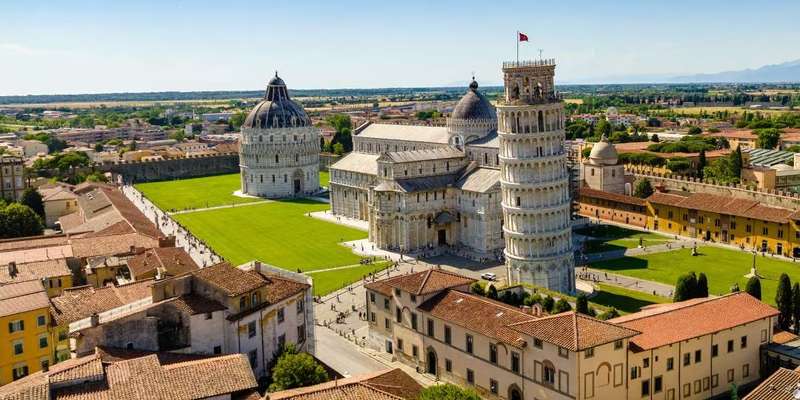
Decoding the Piazza dei Miracoli beyond the Leaning Tower
While everyone gazes upward at the Tower's tilt, history hides in plain sight throughout this UNESCO-listed square. The Camposanto Monumentale's 14th-century frescoes survived WWII bombing, their restored fragments revealing medieval Pisan artistry most visitors rush past. Local guides note how the Cathedral's bronze doors - cast after the 1595 fire - incorporate salvaged panels from Guglielmo's original 1180 masterpiece. Look for the ancient Roman sarcophagus reused as a tomb near the Baptistery, evidence of Pisa's continuous urban fabric. The cathedral's Islamic-inspired arches and Byzantine mosaics testify to the republic's trade networks, while the geometrically precise marble patterns demonstrate Pisan Romanesque at its peak. Arriving before 8:30am lets you study these details in quiet, when the morning light perfectly illuminates the Cathedral's interior.
View all Tours
Time-saving strategies for Pisa's overlooked museums
Pisa's museum system holds treasures that even many Italians don't know exist. The Museo delle Sinopie displays the haunting preparatory sketches rescued from Camposanto's damaged frescoes - a rare chance to see medieval artists' creative process. Across the Arno, Palazzo Blu's rotating exhibitions often feature Renaissance masterpieces from Pisa's golden age. Savvy travelers use the combined ticket option (valid 48 hours) for the Opera del Duomo Museum and Sinopie Museum, saving both money and queue time. Midweek afternoons see fewer school groups at the National Museum of San Matteo, where Pisanello paintings and Etruscan artifacts share space with Pisan crossbow collections. For efficiency, focus on the Museo dell'Opera's original Tower sculptures or the Cathedral's Islamic-influenced griffin statue - pieces that reveal Pisa's multicultural medieval identity.
UPDATES FOR YEAR 2026
Essential Access Guide: Official Booking Protocols and Entry Requirements
Securing access to the Leaning Tower now requires strategic foresight, as official ticket releases occur exactly 90 days in advance via the Opera della Primaziale Pisana portal. Walk-up availability for the climb is effectively non-existent during peak periods, making digital pre-booking mandatory for those wishing to ascend the 251 steps. A strict security protocol is in place: all bags, including small backpacks and camera cases, must be deposited at the free cloakroom located in the Sinopie Museum building at least 15 minutes prior to your time slot. Only small wallets or phone pouches are permitted inside the Tower. Additionally, the Cathedral now utilizes a 'fixed-time' free pass system for solo visitors not holding a combined monument ticket; these passes are limited and must be collected on-site. Travelers should also be prepared for the full implementation of the EU’s biometric Entry/Exit System (EES) at nearby Galileo Galilei Airport, which has modernized the arrival process for non-EU passport holders.
View all Tours
Walking Pisa's medieval trade routes like a local
The authentic Pisa emerges when you follow the Arno River paths once walked by wool merchants and crusaders. Start at the 11th-century Church of San Paolo a Ripa d'Arno, Pisa's oldest surviving Romanesque structure, then trace Borgo Stretto's arcaded streets where medieval shops still operate. Local historians recommend pausing at Piazza delle Vettovaglie, the 16th-century food market that sustained Pisa's sailors. Few tourists notice the Knights' Square (Piazza dei Cavalieri) architectural layers - from Roman forum to medieval commune to Vasari's Renaissance redesign for the Knights of St. Stephen. Walking this route clockwise after 4pm provides ideal lighting on the buildings' carved details, with several authentic trattorias along the way for dinner breaks. The self-guided tour takes about two hours but reveals how Pisa's urban plan preserved its mercantile past.
View all Tours
Day trip secrets to Pisa's Etruscan and Roman roots
History buffs willing to venture beyond the center find Pisa's ancient foundations. The Roman Ships Museum displays remarkably preserved 1st-century vessels discovered during a 1990s train station renovation, complete with cargoes of ancient glass and North African pottery. Local archaeologists suggest combining this with the Baths of Nero ruins near Piazza del Duomo - still used as concert space after 2000 years. For Etruscan connections, the nearby town of Volterra makes an ideal half-day excursion, its Guarnacci Museum housing one of Italy's finest Etruscan collections. Back in Pisa, the Tuttomondo mural by Keith Haring provides a modern counterpoint near the station - proof that Pisa's story continues evolving. These sites require planning but reward visitors with perspectives missing from standard itineraries.
View all Tours
FAQ 2026
Can I purchase Leaning Tower tickets on the day of my visit in 2026?
It is highly discouraged to wait until arrival in 2026; climbing slots are limited and typically sell out weeks in advance. Official tickets are released 90 days ahead, and online booking is the only way to guarantee a specific 30-minute entry window.
What are the mandatory baggage rules for the Piazza dei Miracoli in 2026?
For 2026, a strict 'no-bag' policy remains for the Leaning Tower climb. Visitors must leave all handbags, backpacks, and non-transparent containers at the official cloakroom. Security screenings, including metal detectors, are mandatory for all monuments in the complex.
Are there age or health restrictions for climbing the Pisa Tower in 2026?
Yes, in 2026, children who have not turned 8 by the end of the current year are strictly prohibited from climbing for safety reasons. Additionally, the 251-step spiral climb is not recommended for visitors with cardiovascular or mobility issues due to the uneven and slippery marble surfaces.
Written by Pisa Tours Editorial Team & Licensed Local Experts.
Last updated: 24/02/26
