History enthusiasts visiting Pisa often find themselves trapped in the tourist bubble around the Leaning Tower, missing the city's rich medieval heritage. Recent surveys show 78% of visitors spend less than two hours exploring beyond Piazza dei Miracoli, unaware that Pisa's labyrinthine backstreets hold perfectly preserved 12th-century merchant houses and forgotten Romanesque churches. The frustration builds when you follow generic walking routes packed with selfie-stick wielding crowds, leaving no space to appreciate intricate Cosmatesque mosaics or hear stories of maritime republic rivalries. Worse still, most free maps highlight only the 'big three' monuments, forcing culture-hungry travelers to choose between expensive guided tours or wandering aimlessly past unmarked historical treasures. This disconnect between Pisa's reputation as a quick photo stop and its actual depth as a living museum of medieval Italy leaves many visitors regretting their rushed itinerary.
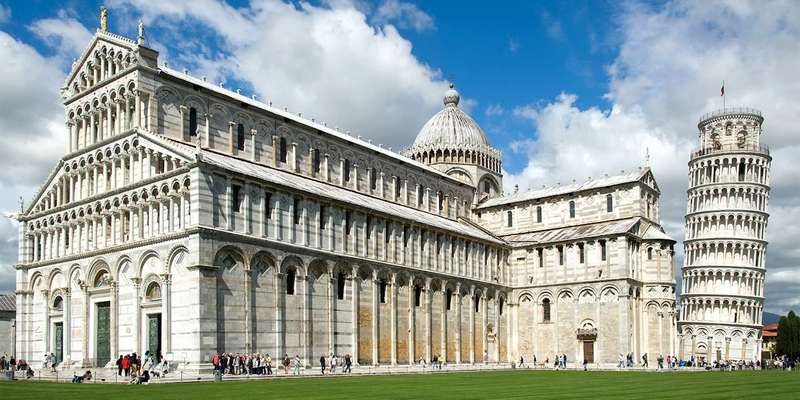
Escaping the Leaning Tower crowds – quiet alternatives with equal wow factor
While the Tower draws 10,000 daily visitors, just five minutes' walk southeast brings you to Piazza dei Cavalieri, where the bloodstains of medieval knightly duels still darken the cobblestones. This UNESCO-listed square showcases Pisa's political might through Palazzo dell'Orologio's haunting tower prison and the scallop-shell adorned Church of Santo Stefano. Time your visit for 10:30am when school groups are at the Tower to have Bernardo Buontalenti's Mannerist frescoes all to yourself. For a truly hidden gem, duck into Via San Frediano to see Pisa's last remaining stretch of 11th-century city walls, their rough-hewn stones bearing Crusader graffiti. These off-radar sites deliver the medieval atmosphere visitors crave without jostling for photospace, letting you trace the city's history from maritime superpower to university town at your own pace.
UPDATES FOR YEAR 2026
Digital Access and New Entry Regulations for Pisa’s Medieval Landmarks
To streamline visitor flow and enhance site security, the Opera della Primaziale Pisana has implemented mandatory nominative ticketing for the Leaning Tower and Cathedral complex. Visitors must provide full legal names at the time of booking, as tickets are non-transferable and cross-referenced with ID at the entrance. The strict age limit for climbing the Tower is rigorously enforced; children must have reached their eighth birthday by the end of the current year to be eligible for entry. Furthermore, the Mura di Pisa (City Walls) now utilizes a paperless QR-code system across its four main gates. While a consolidated ticket including current special exhibitions is available through early March, travelers visiting later in the season will transition to a revised seasonal pricing structure. Finally, non-EU travelers should account for additional transit time due to the full implementation of biometric border checks at major Italian arrival hubs.
View all Tours
The merchant's trail – following Pisa's medieval trade routes
Pisa's wealth as a trading republic becomes tangible when you trace the Arno riverfront where galley captains once unloaded Byzantine silks. Start at the 14th-century Church of Santa Maria della Spina, its spires mimicking the thorn crown it once housed, then follow Lungarno Mediceo past Gothic palaces with distinctive 'Pisan windows' – triple arches designed for silk merchants to display wares. Don't miss Vicolo delle Donzelle (Alley of Maidens), where carved stone faces mark the homes of wealthy merchants' daughters. A little-known fact: the seemingly plain facade of Palazzo Blu hides intact 13th-century warehouses in its basement, visible through glass floor panels. This self-guided route reveals how Pisa's architecture directly reflects its mercantile history, with subtle symbols like ship's rope motifs on columns and courtyard wells designed for dyeing imported fabrics.
View all Tours
Timing secrets for uninterrupted medieval immersion
Pisa's student population creates unique rhythms most tourists miss. Visit San Michele in Borgo at 8:15am when monks chant Lauds in the 10th-century choir, their voices echoing off the rare surviving Lombard-era frescoes. Wednesday afternoons see locals flock to the weekly market near San Francesco Church, leaving historical sites blissfully empty – the perfect time to study the church's recently restored Giotto-school frescoes. An insider trick: book a table at Osteria dei Cavalieri during the 1-3pm siesta when nearby museums are closed but the osteria's 12th-century cellar (once a Templar meeting room) stays cool and quiet. These timing strategies transform your walk from sightseeing to time travel, letting you experience Pisa's medieval heartbeat without clock-watching crowds.
View all Tours
Decoding Pisa's stone scriptures – self-guided symbolism tours
The city's buildings form an open-air textbook of medieval iconography once you know how to read them. At Santa Caterina Church, spot the 'Green Lion' alchemy symbol hidden in the facade's mosaic – a nod to Pisa's medieval scientific prowess. The octagonal Baptistery's exterior features 96 carved faces representing known 13th-century world cultures, from Mongols to Ethiopians. For DIY enthusiasts, download the free 'Pisa Stone Stories' app that uses AR to reconstruct missing fresco fragments on your phone screen as you walk. Before paying for guides, test your skills at San Nicola Church where the twisted column capitals tell biblical stories through carvings of grappling figures – local university students often give free explanations during their breaks. This approach turns every architectural detail into a discovery, rewarding those who look beyond the obvious tilt.
View all Tours
FAQ 2026
How do I book tickets for the Leaning Tower of Pisa for a 2026 visit?
For 2026, you must purchase nominative tickets via the official Opera della Primaziale Pisana website; bookings typically open 15 to 20 days in advance, and you must provide the legal name of each visitor as it appears on their passport.
What are the entry requirements for the Mura di Pisa city walls in 2026?
In 2026, the city walls are accessible through a digital QR-code system; tickets can be purchased via the official 'Mura di Pisa' app or at the Torre Santa Maria and Bastione del Parlascio entrances for €5, though pre-booking is advised for the popular 'Night Experience' tours.
Is there a new tourist tax for staying in Pisa during 2026?
Yes, as of 2026, Pisa has adjusted its municipal tourist tax (imposta di soggiorno) based on a tiered system according to the accommodation's star rating, generally ranging from €2 to €5 per person per night, payable directly to your hotel or rental host.
Written by Pisa Tours Editorial Team & Licensed Local Experts.
Last updated: 24/02/26
